Showing posts with label Toyota. Show all posts

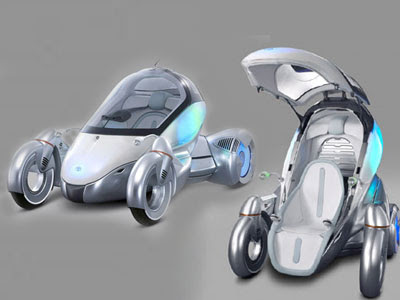
Toyota PM Concept Car a personal transport concept


Toyota PM Concept Car

Toyota PM is highly maneuverable thanks to its castor like wheels capable of rotating through 180 degrees. The front wheels are also notable because of their hub-less design.
The futuristic Toyota PM concept from 2003 is a personal transport concept.
The PM's cockpit opens by touching one of the unusual stalk mounted headlights, this then glows green to announce the impending opening of the glass canopy.
Another interesting feature Toyota has built into the PM is its adjustable ride height and attitude. As the PM's speed increases it lowers to the ground to increase stability and improve aerodynamics.
Inside the PM information regarding vehicle performance and the location of other PM's is relayed to the single occupant by a floating virtual display.
Power for the concept comes from an electric motor.

2010 Toyota Sequoia safety

Standard safety features include Vehicle Stability Control, traction control, anti-lock brakes brake assist, electronic brakeforce distribution, front side torso airbags and roll-sensing side curtain airbags for all three rows. For the 2010 model knee airbags were added as standard feature for front driver and passenger safety.


2010 Toyota Sequoia
2010 Toyota Sequoia

2010 Toyota Sequoia
2010 Toyota Sequoia

2010 Toyota Sequoia
2010 Toyota Sequoia

2010 Toyota Sequoia
2010 Toyota Sequoia


2010 Toyota Sequoia
2010 Toyota Sequoia

2010 Toyota Sequoia
2010 Toyota Sequoia


2010 Toyota Sequoia
2010 Toyota Sequoia


2010 Toyota Sequoia
2010 Toyota Sequoia


2010 Toyota Sequoia
2010 Toyota Sequoia


All Review videos and more of:• Infiniti• Mitsubishi• Aston Martin• Isuzu• Nissan• Audi• Jaguar • Pontiac• Bentley• Jeep• Porsche• BMW• Kia• Rolls Royce• Buick• Lamborghini• Saab• Cadillac• Land Rover• Saturn• Chevrolet• Lexus• Scion• Chrysler• Lincoln• Smart• Dodge• Lotus• Subaru• Ferrari• Maserati• Suzuki• Ford• Maybach• Tesla• GMC• Mazda• Toyota• Honda• Mercedes-Benz• Volkswagen• HUMMER• Mercury• Volvo• Hyundai• MINI.and MORE....

Toyota Venza Safety

Toyota’s standard Star Safety System includes:

* Vehicle Stability Control
* Traction control
* Electronic brakeforce distribution
* Brake Assist
* Anti-lock braking

Toyota Venza
Toyota Venza
Toyota Venza
Toyota Venza
Toyota Venza
Toyota Venza
* Hill-start Assist Control
* Tire pressure monitoring system
* Active head restraints for front-seat occupants, which prevent or limit the extent of whiplash in certain types of rear-end collisions.
* 3-point seatbelts and headrests for all seats
* Emergency locking retractors (ELR) for all seats
* Automatic locking retractors (ATR) for all seats (except driver’s)
* Front seatbelt pretensioners with force limiters
* LATCH (Lower Anchors and Tethers for Children) for rear outboard seats

Toyota Venza
Toyota Venza
Toyota Venza
Toyota Venza
Toyota Venza
Toyota Venza
Toyota Venza
Toyota Venza

The 1997 Toyota Hilux


My Hilux is a 1997 Toyota with leaf springs all round. The Toyota Hilux was originally built way back in the 1980s with leaf spring suspension, and then when the SR5's came out independent front suspension was brought in. After 1997 the other normal hiluxes became independent front end too, which frankly for serious four wheel driving can cause issues.
Independent suspension is generally better for on road use, but off-road it isn't as strong or reliable and doesn't offer the same amount of flex. In saying this, they are still good cars. My Hilux has the leaf springs all round, and as a result is incredibly robust. I have put a set of 33 inch Maxxis bighorns on it, and it will keep up with all of the land cruisers and patrols out there. It doesn't have any difflocks, but the LSD at the back seems to help every so often.
I love the fact that My Hilux weighs so little. When you consider that some of the new four wheel drives today weigh almost 3 tonne and my car only weighs 1.5 you can see why they are such capable little machines. The only gripe that I have with it is that a 2.4 liter engine isn't very powerful. However, on a positive note they are incredibly economical, and not that slow on road. To make mine even more economical I converted it to gas, which gives it a good range for driving long distances.
The Maxxis Bighorns have to be the best modification I did. They are 12.5 inches wide (slightly wider than the standard tires) but a lot more aggressive. I have used mine so far for over 20 thousand kilometers and have yet to fault them. They wear hardly at all, are very grippy, bulge well when you let the tires down and love the mud. It's a great car!
Link to My Hilux and Maxxis Bighorns
Hidden Gems North of Perth
There are quite a few hidden gems found north of Perth. The farmstead at Wagoe is something that very few people know about, but it is one of the best places you can ever stay for fishing and snorkeling. Lucky Bay is just south of Wagoe, and as long as you are well set up for camping you will have a ball. Both of these places are about a 5.5 hour drive north of Perth, but they are well worth the drive.
I would suggest that you need a four wheel drive for both locations (especially Lucky bay). Wagoe you can get to the farmstead without one, but you would have to walk down to the beach every time that you wanted to go, which would become a real issue. By car, it's only a 3 minute drive, which is great as you can roll out of bed, throw the fishing gear in the car and roll down the hill. The beach there has masses of reef, and you can catch some huge fish. Every time we go there we have an absolute blast. The accommodation at Wagoe is much cheaper than in kalbarri, although it is not exactly luxury!
If you prefer something even cheaper you could consider lucky bay. This has a brilliant reef which runs about 100 meters parallel to the beach, about 50 meters out. The reef stops all of the bad weather, and snorkeling on the inside of the reef is always pretty decent. On a calm day though, you can head out the back and see some huge fish!

The New 2010 Toyota Avalon


The 2010 Toyota Avalon has not been altered significantly from the 2009 model. The 2010 Avalon keeps the same 3.5-liter V6 engine as its predecessor, which produces 268 horsepower and 248 pound-feet of torque. This is the only engine available for all three trim options in the 2010 Avalon. This engine is a dual overhead cam (DOHC) 24-valve six-cylinder engine with Toyota's variable valve timing with intelligence (VVT-i), which makes the engine more responsive without hurting the fuel economy. The Avalon peaks in torque at just 4700 rpm, while maximum horsepower output comes at 6200 rpm.
This car is made to be stately and easy to drive, so all models include a standard six-speed automatic transmission. While it may seem that the Avalon's specs aren't any different from competing models like the Honda Accord and Nissan Maxima, what sets the Avalon apart is the engine's fuel economy. With 19 mpg in the city and 28 mpg on the highway, as well as a 23 mpg combined EPA rating, this is one of the most fuel efficient full-size sedans available. It is rated as a Ultra Low Emission Vehicle (ULEV) by the EPA, and its 18.5 gallon fuel tank gives it a range of 425 miles between fill-ups.
The Avalon's mighty V6 propels the car to 60 mph in just 6.4 seconds, which leads every car in its class but the Nissan Maxima, which makes the same run in 5.9 seconds. For a car this size, though, the acceleration isn't as important as considerations like the space and driving characteristics. This car aspires to the Lexus style of handling ease and comfort. While some drivers may be unsatisfied with the car's sportiness, those who want a reliably comfortable ride will enjoy the Avalon's ride.

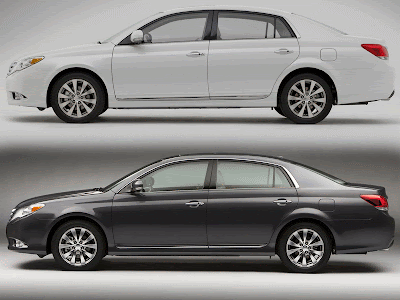
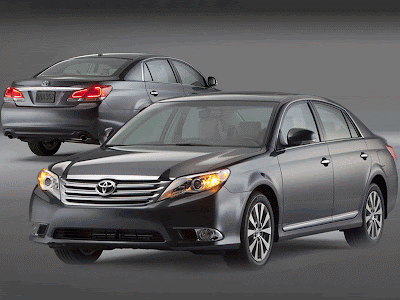
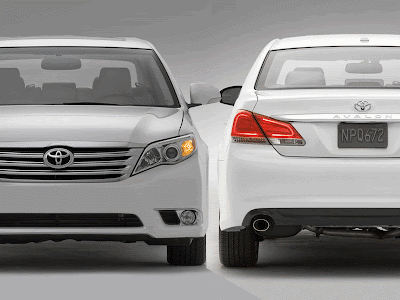
2011 Redesigned Toyota Avalon Third Generation

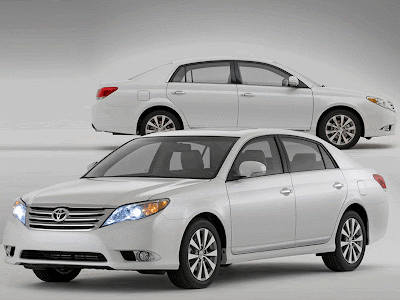
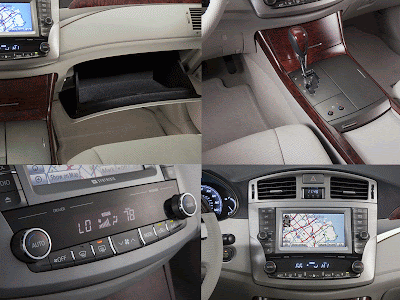
Evoking a time when travel was sophisticated, elegant and comfortable, the new Toyota Avalon possesses a distinctive new exterior style while offering a restyled interior rich with premium touch points and practical new technologies. Toyota introduced the boldly redesigned 2011 Toyota Avalon at the 2010 Chicago Auto Show. The third generation Toyota Avalon was introduced in four models: the standard XL, the sport Touring, the XLS, and the luxury Limited. Each combined generous interior room with powerful engine performance. 
2011 Redesigned Toyota Avalon Third Generation 
Designed at Toyota’s Calty Design Research in California, and assembled at Toyota’s Georgetown Kentucky manufacturing plant, the third-generation Avalons all have front grilles with horizontal chrome bars, large tail lamps, distinctive trunks, and dual exhaust outlets.
Even with numerous refinements inside and out, the Toyota Avalon remains true to the idea that comfort is honest and uncomplicated, and "Traveling Avalon Class" is rich in simple, familiar pleasures.
2011 Redesigned Toyota Avalon Third Generation 
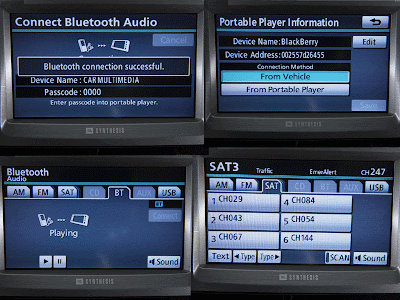
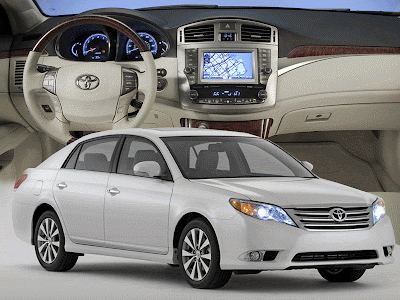
The new Toyota Avalon has dynamic and expressive lines, and an infusion of comfort, safety and technology advancements that enrich the driving experience. Upgraded equipment and technology features, such as a touch-screen navigation system with real-time traffic, and Bluetooth® hands-free phone capability with music streaming to the audio system are among the improvements that enhance the 2011 Avalon's excellent blend of spaciousness, comfort and technology.
2011 Redesigned Toyota Avalon Third Generation 
"The Toyota Avalon has long been appreciated by smart, conscientious consumers who recognize quality materials and the beauty of detailed craftsmanship," said Bob Carter, group vice president and general manager, Toyota Division, Toyota Motor Sales, U.S.A. "The changes made for 2011 will allow us to build on our position in the premium large car segment. The competition does not stand still, and neither do we."
2011 Redesigned Toyota Avalon Third Generation 
Restyled at Calty Design Research in Newport Beach, Calif., the Toyota Avalon is assembled at Toyota Motor Manufacturing Kentucky (TMMK), a "zero landfill" facility that also assembles the Camry, Camry Hybrid, and Venza. It was also developed at the Toyota Technical Center (TTC) in Ann Arbor, Mich. For 2011, Calty restyled Toyota Avalon to project an elegant, outgoing presence. A wider, more substantial grille ties into state-of-the-art projector headlamps, working with a broad, undisturbed front hood to suggest a lowered center of gravity and emphasize the Toyota Avalon's wide stance.
2011 Redesigned Toyota Avalon Third Generation 
A power rear sunshade, deployable via a one-touch lever, filters direct sunlight coming through the rear window. The sunshade, which helps to protect rear seat passengers from unwanted light and heat, automatically detracts when the driver selects reverse gear. Toyota Avalon's exceptional combination of ample horsepower and excellent fuel economy offers one of the best overall dynamic performances in the large sedan segment.
2011 Redesigned Toyota Avalon Third Generation 
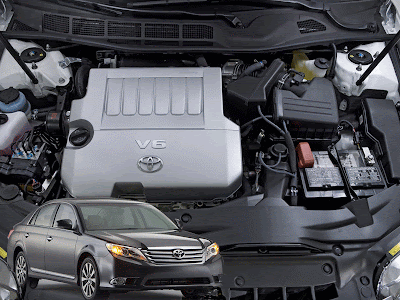
The 2011 Avalon is powered by a 24-valve, dual-overhead cam 3.5-liter V6 engine that produces 268 horsepower at 6,200 rpm. The engine is equipped with the latest dual VVT-i electronic valve-control mechanism that provides a broader powerband, while requiring less fuel and generating fewer emissions. It is mated to a multi-mode six-speed automatic transmission. The 2011 Toyota Avalon is an Ultra Low Emission Vehicle (ULEV), EPA-estimated to deliver 20 mpg in the city, 29 highway, and 23 combined, as good as or better than any V6 model in the segment.
2011 Redesigned Toyota Avalon Third Generation 
The 2011 Toyota Avalon will be available in two grades when it arrives in showrooms in the spring of 2010, Avalon and Limited. Both grades will be well equipped with standard equipment like eight-way leather-trimmed power driver's seats, back-up camera, dual zone automatic climate control with air filtration, moonroof and 17-inch alloy wheels. Toyota Avalon will be available in nine exterior colors including three new colors: Zephyr Blue Metallic, Cypress Pearl and Sizzling Crimson Mica.

2011 Redesigned Toyota Avalon Third Generation

Evoking a time when travel was sophisticated, elegant and comfortable, the new Toyota Avalon possesses a distinctive new exterior style while offering a restyled interior rich with premium touch points and practical new technologies. Toyota introduced the boldly redesigned 2011 Toyota Avalon at the 2010 Chicago Auto Show. The third generation Toyota Avalon was introduced in four models: the standard XL, the sport Touring, the XLS, and the luxury Limited. Each combined generous interior room with powerful engine performance. 
2011 Redesigned Toyota Avalon Third Generation 
Designed at Toyota’s Calty Design Research in California, and assembled at Toyota’s Georgetown Kentucky manufacturing plant, the third-generation Avalons all have front grilles with horizontal chrome bars, large tail lamps, distinctive trunks, and dual exhaust outlets.
Even with numerous refinements inside and out, the Toyota Avalon remains true to the idea that comfort is honest and uncomplicated, and "Traveling Avalon Class" is rich in simple, familiar pleasures.
2011 Redesigned Toyota Avalon Third Generation 
The new Toyota Avalon has dynamic and expressive lines, and an infusion of comfort, safety and technology advancements that enrich the driving experience. Upgraded equipment and technology features, such as a touch-screen navigation system with real-time traffic, and Bluetooth® hands-free phone capability with music streaming to the audio system are among the improvements that enhance the 2011 Avalon's excellent blend of spaciousness, comfort and technology.
2011 Redesigned Toyota Avalon Third Generation 
"The Toyota Avalon has long been appreciated by smart, conscientious consumers who recognize quality materials and the beauty of detailed craftsmanship," said Bob Carter, group vice president and general manager, Toyota Division, Toyota Motor Sales, U.S.A. "The changes made for 2011 will allow us to build on our position in the premium large car segment. The competition does not stand still, and neither do we."
2011 Redesigned Toyota Avalon Third Generation 
Restyled at Calty Design Research in Newport Beach, Calif., the Toyota Avalon is assembled at Toyota Motor Manufacturing Kentucky (TMMK), a "zero landfill" facility that also assembles the Camry, Camry Hybrid, and Venza. It was also developed at the Toyota Technical Center (TTC) in Ann Arbor, Mich. For 2011, Calty restyled Toyota Avalon to project an elegant, outgoing presence. A wider, more substantial grille ties into state-of-the-art projector headlamps, working with a broad, undisturbed front hood to suggest a lowered center of gravity and emphasize the Toyota Avalon's wide stance.
2011 Redesigned Toyota Avalon Third Generation 
A power rear sunshade, deployable via a one-touch lever, filters direct sunlight coming through the rear window. The sunshade, which helps to protect rear seat passengers from unwanted light and heat, automatically detracts when the driver selects reverse gear. Toyota Avalon's exceptional combination of ample horsepower and excellent fuel economy offers one of the best overall dynamic performances in the large sedan segment.
2011 Redesigned Toyota Avalon Third Generation 
The 2011 Avalon is powered by a 24-valve, dual-overhead cam 3.5-liter V6 engine that produces 268 horsepower at 6,200 rpm. The engine is equipped with the latest dual VVT-i electronic valve-control mechanism that provides a broader powerband, while requiring less fuel and generating fewer emissions. It is mated to a multi-mode six-speed automatic transmission. The 2011 Toyota Avalon is an Ultra Low Emission Vehicle (ULEV), EPA-estimated to deliver 20 mpg in the city, 29 highway, and 23 combined, as good as or better than any V6 model in the segment.
2011 Redesigned Toyota Avalon Third Generation 
The 2011 Toyota Avalon will be available in two grades when it arrives in showrooms in the spring of 2010, Avalon and Limited. Both grades will be well equipped with standard equipment like eight-way leather-trimmed power driver's seats, back-up camera, dual zone automatic climate control with air filtration, moonroof and 17-inch alloy wheels. Toyota Avalon will be available in nine exterior colors including three new colors: Zephyr Blue Metallic, Cypress Pearl and Sizzling Crimson Mica.

2011 Third-generation Toyota Sienna Minivan

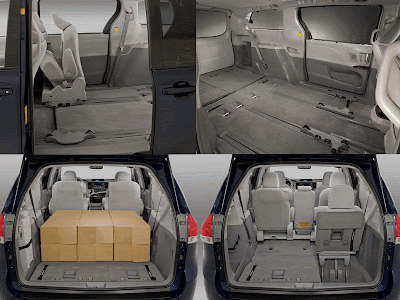
Toyota is the first carmaker in North America to be offering this innovation. The Auto Access Seat has a seat-mounted ingress/egress switch and a wireless remote control that allows for easy and flexible seat operation. The seat is able to rotate 90 degrees and can be lowered to within 19 inches of the ground to further facilitate easier passenger transfers at the exact height required. The Toyota Sienna is well known as a transportation solution for moving people and cargo comfortably and efficiently. The third-generation Toyota Sienna will look and drive more like a sedan, conform to new ideas about personal comfort, easily accommodate cargo, and handle big loads. The Toyota Sienna will come in five conveniently configured grades, all sharing a distinctly new visual direction and features. Toyota unveiled the all-new, third-generation Toyota Sienna minivan at a media conference at the 2009 Los Angeles Auto show.
2011 Third-generation Toyota Sienna Minivan

The 2011 Sienna has been reinvented to handle these needs as it shifts to a more expressive and dynamic vehicle with a stronger profile, high shoulder character and responsive handling. The 2011 Toyota Sienna may be the Japanese automaker's third-generation minivan, but Toyota emphasizes that the new Sienna is becoming more carlike than ever. The Sienna gets smart updates to its drivetrains and to its interior package for 2011-but not to its seating configurations, which still lag the class-leading Dodge Grand Caravan and Nissan Quest in flexibility. The Sienna is offered in a broad model range, and continues to be the only minivan with an all-wheel-drive option.
2011 Third-generation Toyota Sienna Minivan

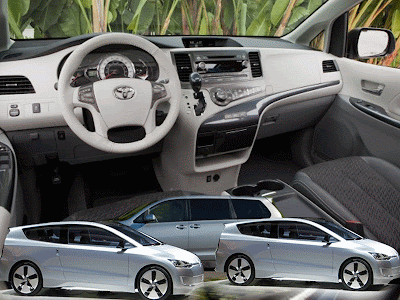
The third-generation Sienna combines a contemporary style with features not previously seen in a minivan, and a fun-to-drive spirit that will surprise many, along with the flexibility, spaciousness and features that have defined the segment. The Sienna was designed by Toyota's Calty Design Research and developed at Toyota Technical Center in Ann Arbor, Mich., with assembly being accomplished at Toyota Motor Manufacturing, Indiana.
2011 Third-generation Toyota Sienna Minivan

A Toyota first rear-seat Dual View Entertainment Center is another innovative option. The system uses two displays side-by-side to create a seamless 16.4-inch widescreen image from a single source. When two separate entertainment options are called for, the system can split the screen into two individual screens, each with input from separate sources. Used as a single screen, it can be easily seen from the third row, and it can be operated from any seat via remote control. Used as two screens, the system can accommodate the preferences of two separate passengers who might want to play a video game or watch a second DVD simultaneously via auxiliary inputs.
2011 Third-generation Toyota Sienna Minivan

A choice of two responsive DOHC engines will be available: a 3.5-liter V6 or 2.7-liter four-cylinder engine. By adding the alternative of a four-cylinder engine, the 2011 Toyota Sienna is the first minivan in years to stray from the V-6-engine-only formula. Both engines offer the latest in efficient, lightweight technology, including Dual Variable Valve Timing with intelligence (VVT-i), roller rocker arms and an Acoustically Controlled Induction System (ACIS) that changes the length of the air-intake pipe to supply more torque on demand. 
2011 Third-generation Toyota Sienna Minivan

The 3.5-liter V6 makes 266 horsepower at 6,200 rpm, with expected EPA-estimated mileage ratings of 18 mpg city/24 mpg highway (16 mpg city/22 mpg highway on AWD models). It also has a 3,500-pound tow capacity. With 187 horsepower at 5,800 rpm, the 2.7-liter four-cylinder engine produces responsive power that exceeds some competitors V6 performance, while delivering expected EPA-estimated fuel efficiency ratings of 19 mpg city and 26 mpg on the highway. Given its upgraded engineering, every Toyota Sienna will ride well and track cleanly through corners, but none more so than the newest addition to the line: the sporty SE.
2011 Third-generation Toyota Sienna Minivan

The Limited is designed for customers who want all the features with more luxury. The standard equipment list is extensive, including new second-row Lounge Seating and a power 60/40 Split & Stow third-row seat, front and rear parking sonar, dual moonroof, Smart Key, and Safety Connect™. Select options include those available on the XLE plus HID auto high-beam auto-high beam headlamps, rain-sensing wipers, and Pre-Collision System (PCS) with Dynamic Radar Cruise Control.
2011 Third-generation Toyota Sienna Minivan

The Toyota Sienna will come in five grades: Sienna grade, LE, SE, XLE and Limited. All-wheel-drive is available with the V6 on LE, XLE and Limited models. The all-new 2011 Toyota Sienna will begin arriving at Toyota dealerships in February 2010.

2011 Third-generation Toyota Sienna Minivan

Toyota is the first carmaker in North America to be offering this innovation. The Auto Access Seat has a seat-mounted ingress/egress switch and a wireless remote control that allows for easy and flexible seat operation. The seat is able to rotate 90 degrees and can be lowered to within 19 inches of the ground to further facilitate easier passenger transfers at the exact height required. The Toyota Sienna is well known as a transportation solution for moving people and cargo comfortably and efficiently. The third-generation Toyota Sienna will look and drive more like a sedan, conform to new ideas about personal comfort, easily accommodate cargo, and handle big loads. The Toyota Sienna will come in five conveniently configured grades, all sharing a distinctly new visual direction and features. Toyota unveiled the all-new, third-generation Toyota Sienna minivan at a media conference at the 2009 Los Angeles Auto show.
2011 Third-generation Toyota Sienna Minivan

The 2011 Sienna has been reinvented to handle these needs as it shifts to a more expressive and dynamic vehicle with a stronger profile, high shoulder character and responsive handling. The 2011 Toyota Sienna may be the Japanese automaker's third-generation minivan, but Toyota emphasizes that the new Sienna is becoming more carlike than ever. The Sienna gets smart updates to its drivetrains and to its interior package for 2011-but not to its seating configurations, which still lag the class-leading Dodge Grand Caravan and Nissan Quest in flexibility. The Sienna is offered in a broad model range, and continues to be the only minivan with an all-wheel-drive option.
2011 Third-generation Toyota Sienna Minivan

The third-generation Sienna combines a contemporary style with features not previously seen in a minivan, and a fun-to-drive spirit that will surprise many, along with the flexibility, spaciousness and features that have defined the segment. The Sienna was designed by Toyota's Calty Design Research and developed at Toyota Technical Center in Ann Arbor, Mich., with assembly being accomplished at Toyota Motor Manufacturing, Indiana.
2011 Third-generation Toyota Sienna Minivan

A Toyota first rear-seat Dual View Entertainment Center is another innovative option. The system uses two displays side-by-side to create a seamless 16.4-inch widescreen image from a single source. When two separate entertainment options are called for, the system can split the screen into two individual screens, each with input from separate sources. Used as a single screen, it can be easily seen from the third row, and it can be operated from any seat via remote control. Used as two screens, the system can accommodate the preferences of two separate passengers who might want to play a video game or watch a second DVD simultaneously via auxiliary inputs.
2011 Third-generation Toyota Sienna Minivan

A choice of two responsive DOHC engines will be available: a 3.5-liter V6 or 2.7-liter four-cylinder engine. By adding the alternative of a four-cylinder engine, the 2011 Toyota Sienna is the first minivan in years to stray from the V-6-engine-only formula. Both engines offer the latest in efficient, lightweight technology, including Dual Variable Valve Timing with intelligence (VVT-i), roller rocker arms and an Acoustically Controlled Induction System (ACIS) that changes the length of the air-intake pipe to supply more torque on demand. 
2011 Third-generation Toyota Sienna Minivan

The 3.5-liter V6 makes 266 horsepower at 6,200 rpm, with expected EPA-estimated mileage ratings of 18 mpg city/24 mpg highway (16 mpg city/22 mpg highway on AWD models). It also has a 3,500-pound tow capacity. With 187 horsepower at 5,800 rpm, the 2.7-liter four-cylinder engine produces responsive power that exceeds some competitors V6 performance, while delivering expected EPA-estimated fuel efficiency ratings of 19 mpg city and 26 mpg on the highway. Given its upgraded engineering, every Toyota Sienna will ride well and track cleanly through corners, but none more so than the newest addition to the line: the sporty SE.
2011 Third-generation Toyota Sienna Minivan

The Limited is designed for customers who want all the features with more luxury. The standard equipment list is extensive, including new second-row Lounge Seating and a power 60/40 Split & Stow third-row seat, front and rear parking sonar, dual moonroof, Smart Key, and Safety Connect™. Select options include those available on the XLE plus HID auto high-beam auto-high beam headlamps, rain-sensing wipers, and Pre-Collision System (PCS) with Dynamic Radar Cruise Control.
2011 Third-generation Toyota Sienna Minivan

The Toyota Sienna will come in five grades: Sienna grade, LE, SE, XLE and Limited. All-wheel-drive is available with the V6 on LE, XLE and Limited models. The all-new 2011 Toyota Sienna will begin arriving at Toyota dealerships in February 2010.

Share

Twitter Delicious Facebook Digg Stumbleupon Favorites More